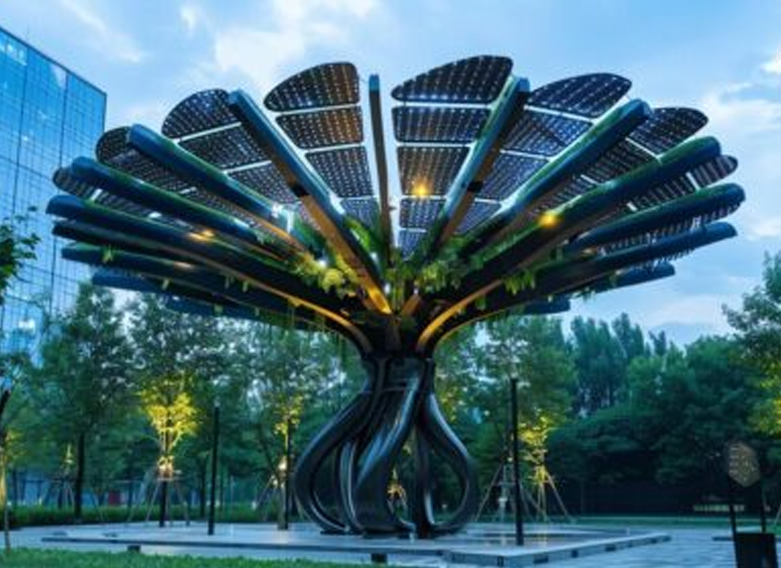
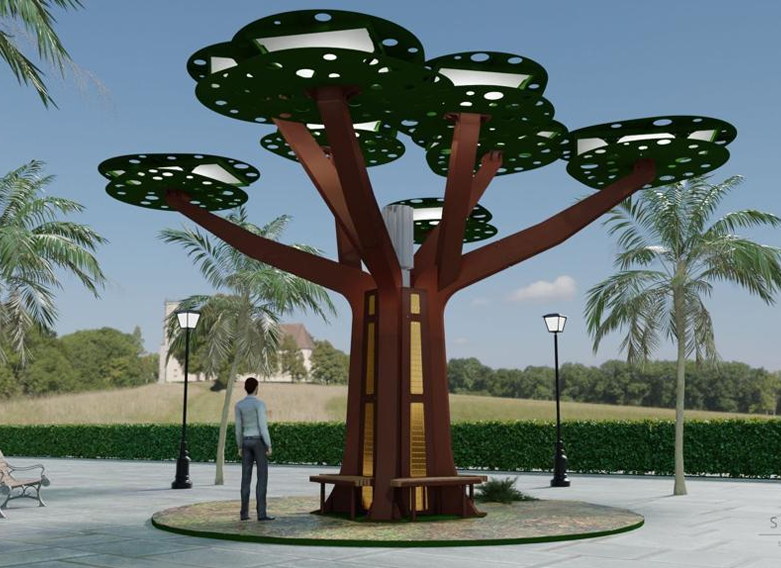
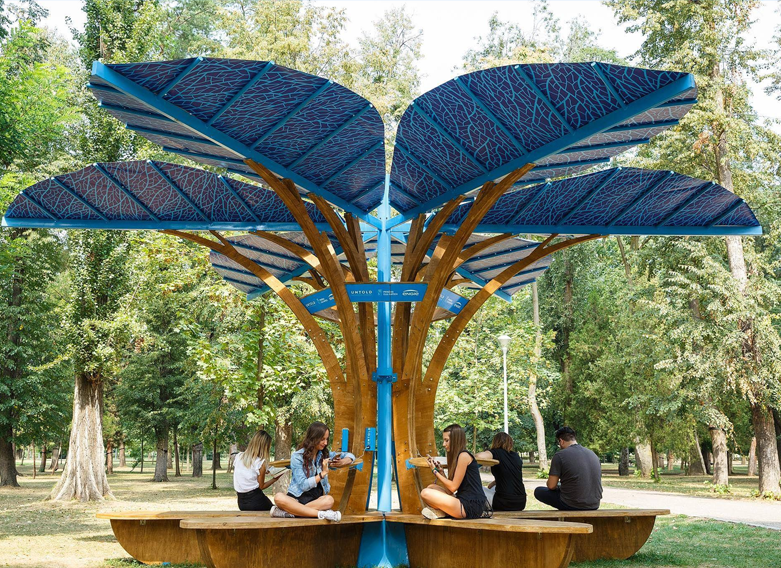
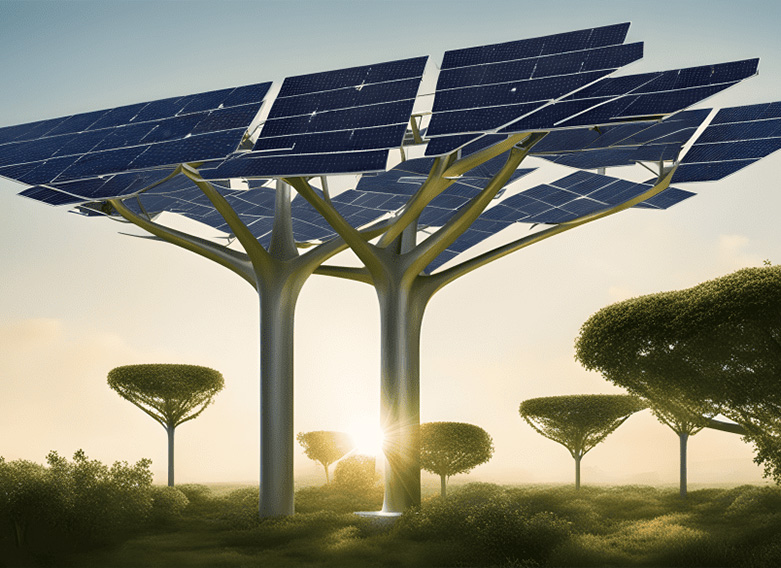
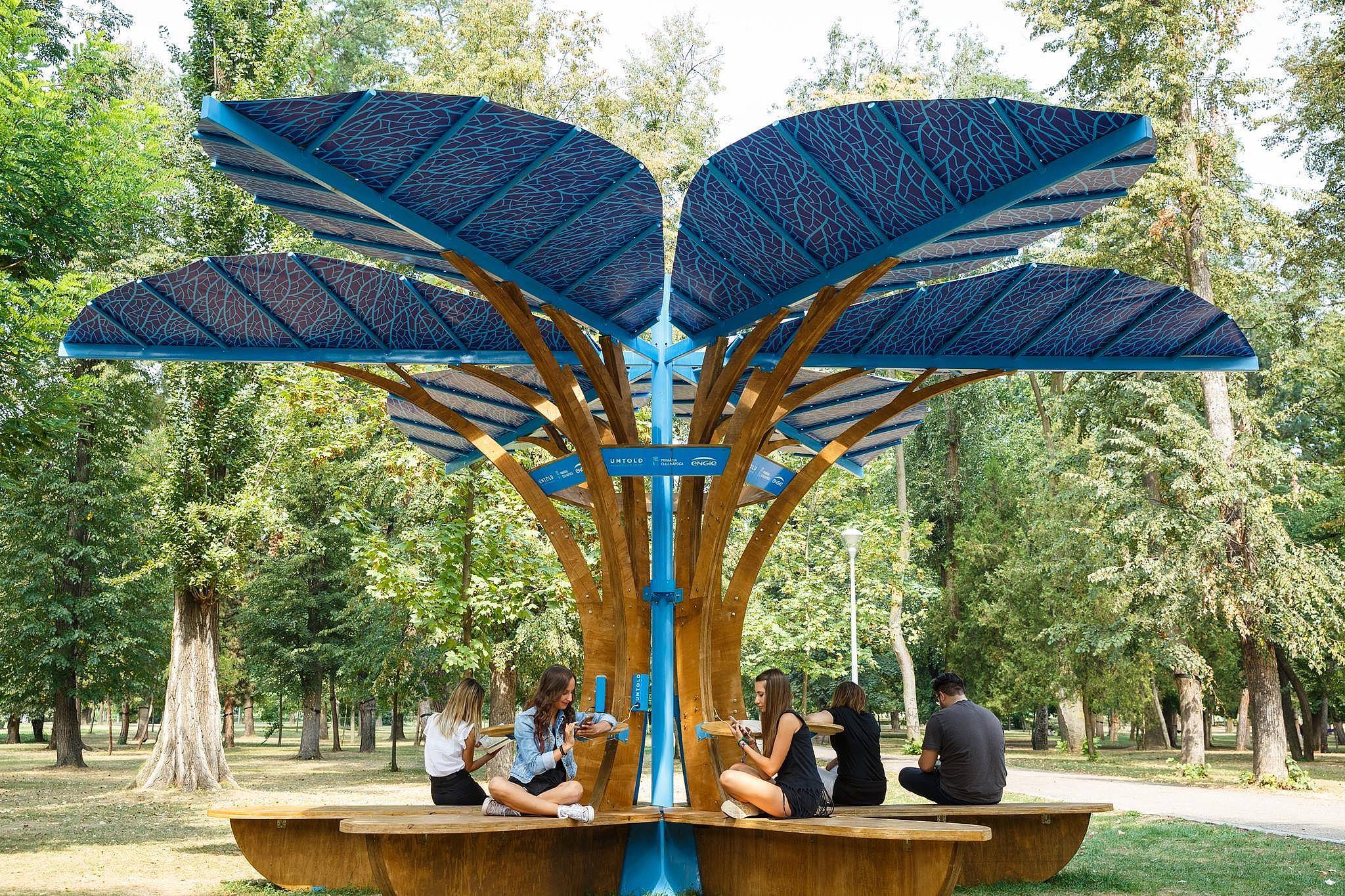
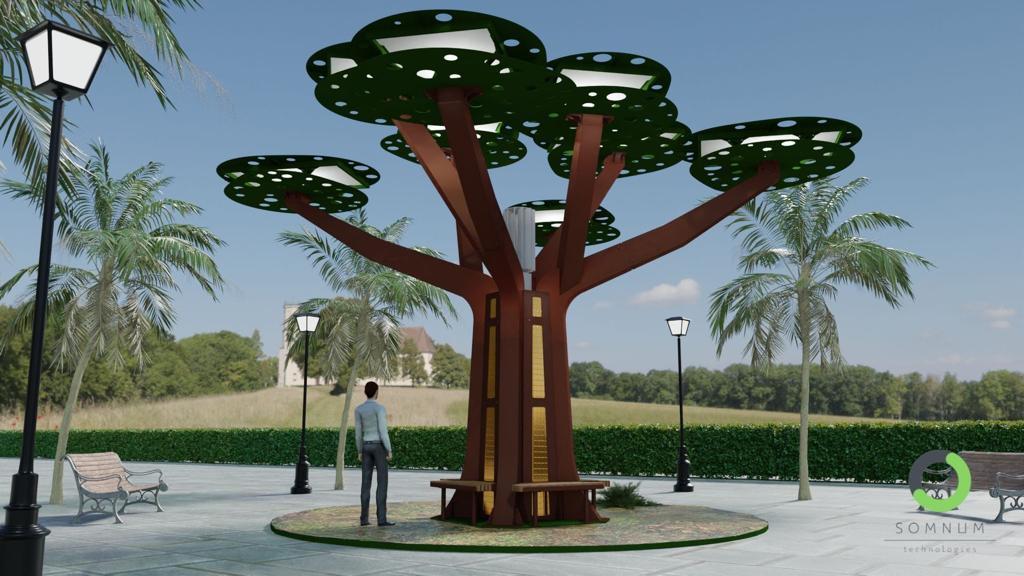
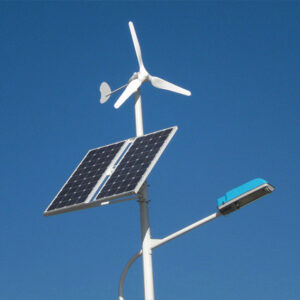
A solar tree is a structure that mimics the shape of a real tree, but instead of leaves, it has solar panels as “branches” or “leaves.” These panels absorb sunlight and generate electricity. It’s especially useful where space is limited.
Key Benefits of a Solar Tree:
Space-Saving: Occupies 10%–20% space of a rooftop system with same output.
Aesthetic Appeal: Beautiful and futuristic — great for public spaces or eco-conscious businesses.
360° Sunlight Capture: Panels are tilted at multiple angles for better sun exposure.
Ideal for Awareness: Used in parks, schools, or urban spaces to promote green energy.
Solar Energy:
The solar tree is an innovative and aesthetically designed solar energy system that mimics the structure of a natural tree while harvesting solar power using photovoltaic (PV) panels. Unlike traditional flat solar panels, solar trees are vertically elevated structures, making them ideal for urban, space-constrained environments. These structures combine clean energy generation, urban greening, and sustainable design, representing a fusion of engineering, environmental science, and architecture.
A central vertical pole (trunk) acting as the structural support.
Multiple horizontal or angular branches, each carrying solar panels (leaves).
Smart integration of batteries, sensors, lighting systems, and IoT components
Design and Engineering Aspects
Structural Design
Trunk and Branch Configuration: Mimics real trees for maximum panel exposure and wind resistance.
Material Use: Lightweight alloys, galvanized steel, or composites.
Photovoltaic System Design
Solar Panel Type: Typically monocrystalline or polycrystalline silicon panels.
Orientation: Optimized tilt angles to capture sunlight throughout the day.
Applications of Solar Trees
Urban and Smart Cities
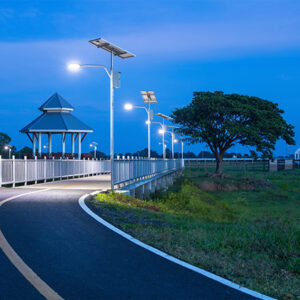
Street lighting, smart benches, Wi-Fi hubs.
Integration with smart transportation and EV charging stations.