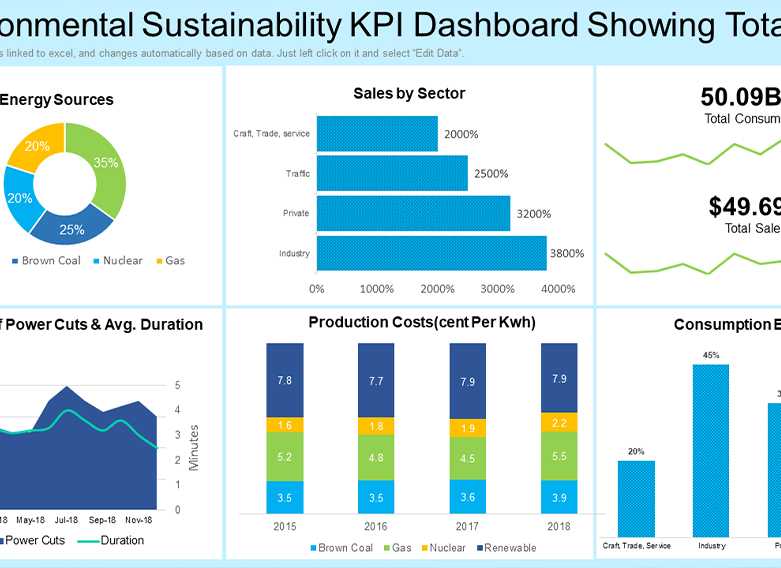
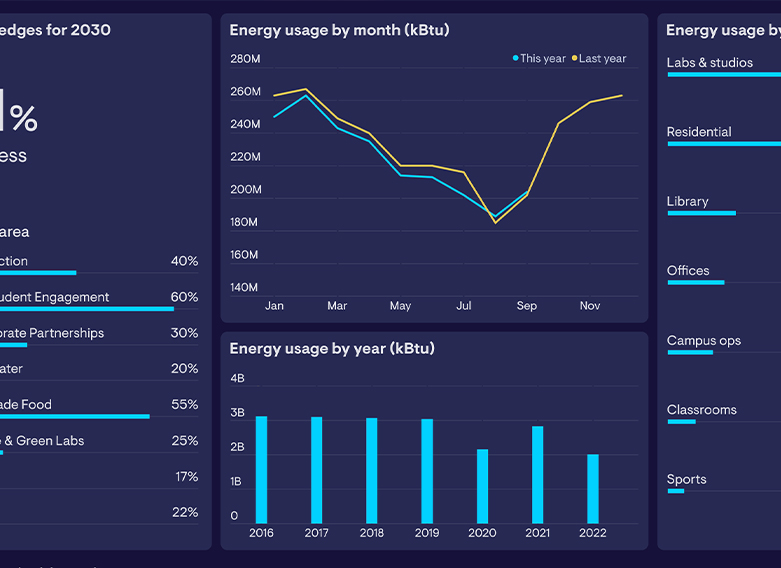
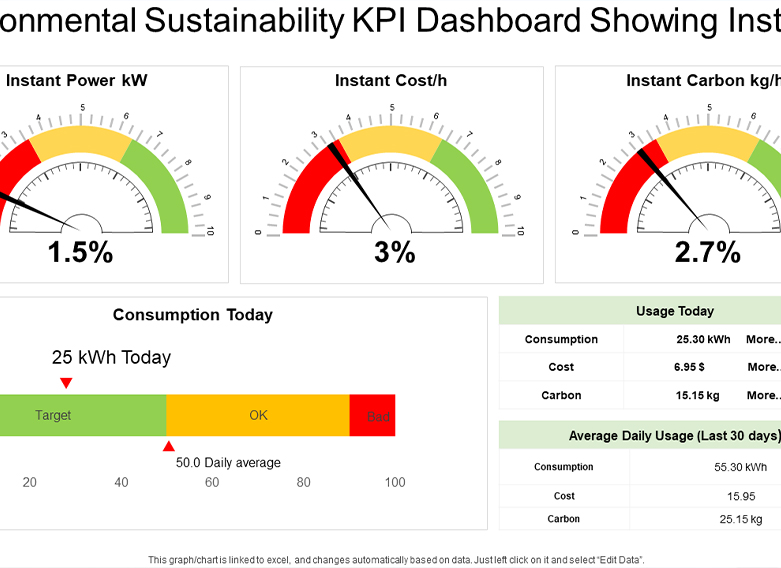
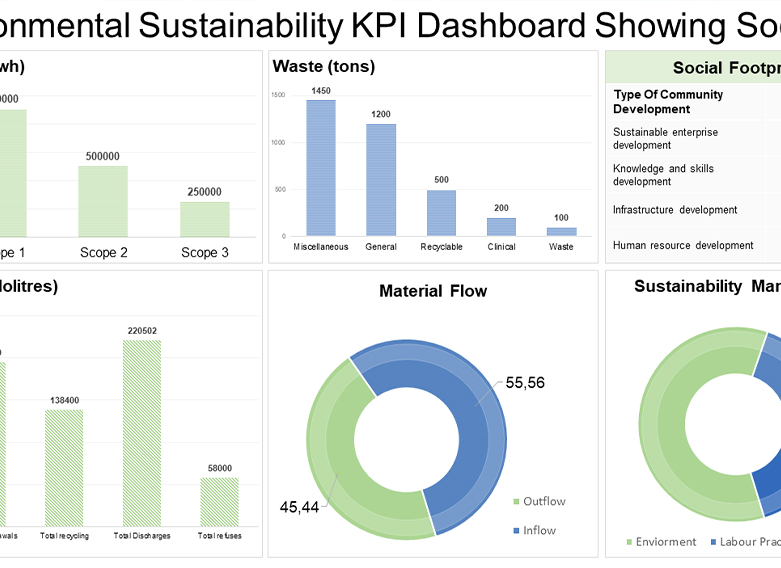
Environmental Monitoring and Reporting Dashboards are interactive platforms used to visualize, track, and analyze environmental data in real time or periodically. These dashboards support decision-making, regulatory compliance, and public transparency by aggregating data from multiple sources and presenting it through user-friendly interfaces.
Real-Time Monitoring
Air quality (e.g., PM2.5, PM10, NO2, CO2)
Water quality (e.g., pH, turbidity, dissolved oxygen)
Noise levels
Soil conditions
Meteorological data (e.g., temperature, humidity, rainfall)
Environmental monitoring and reporting dashboards
Environmental degradation, climate change, industrialization, and rapid urban development have led to increased environmental challenges. To manage these challenges effectively, real-time monitoring and data-driven environmental management have become essential. Environmental Monitoring and Reporting Dashboards (EMRDs) serve as powerful digital tools that aggregate, analyze, and present environmental data to facilitate informed decision-making, policy formulation, and regulatory compliance.
Transparency and accountability
Efficient environmental management
Key Components of an EMRD
Data Acquisition Layer
IoT Sensors: Air, water, soil, and noise quality sensors.
Satellite Imagery: Remote sensing for large-scale environmental changes.
Manual Inputs: Field data collected via mobile devices or forms.
Data Processing & Analytics Engine
Data Cleaning and Validation: To ensure accuracy and remove anomalies.